Glow Sign Boards in Bengaluru: Illuminated Storefront Signage
The sign that finds your shop after dark, fabricated per storefront.
A glow sign board is an illuminated signage unit, typically an acrylic face over an LED-lit aluminium housing, fabricated for a specific storefront. Unlike media formats bought by the month, a glow sign is a manufactured asset that stays with the premises, and the single highest-return signage investment for any retail business that trades after dark.
What a glow sign board actually is
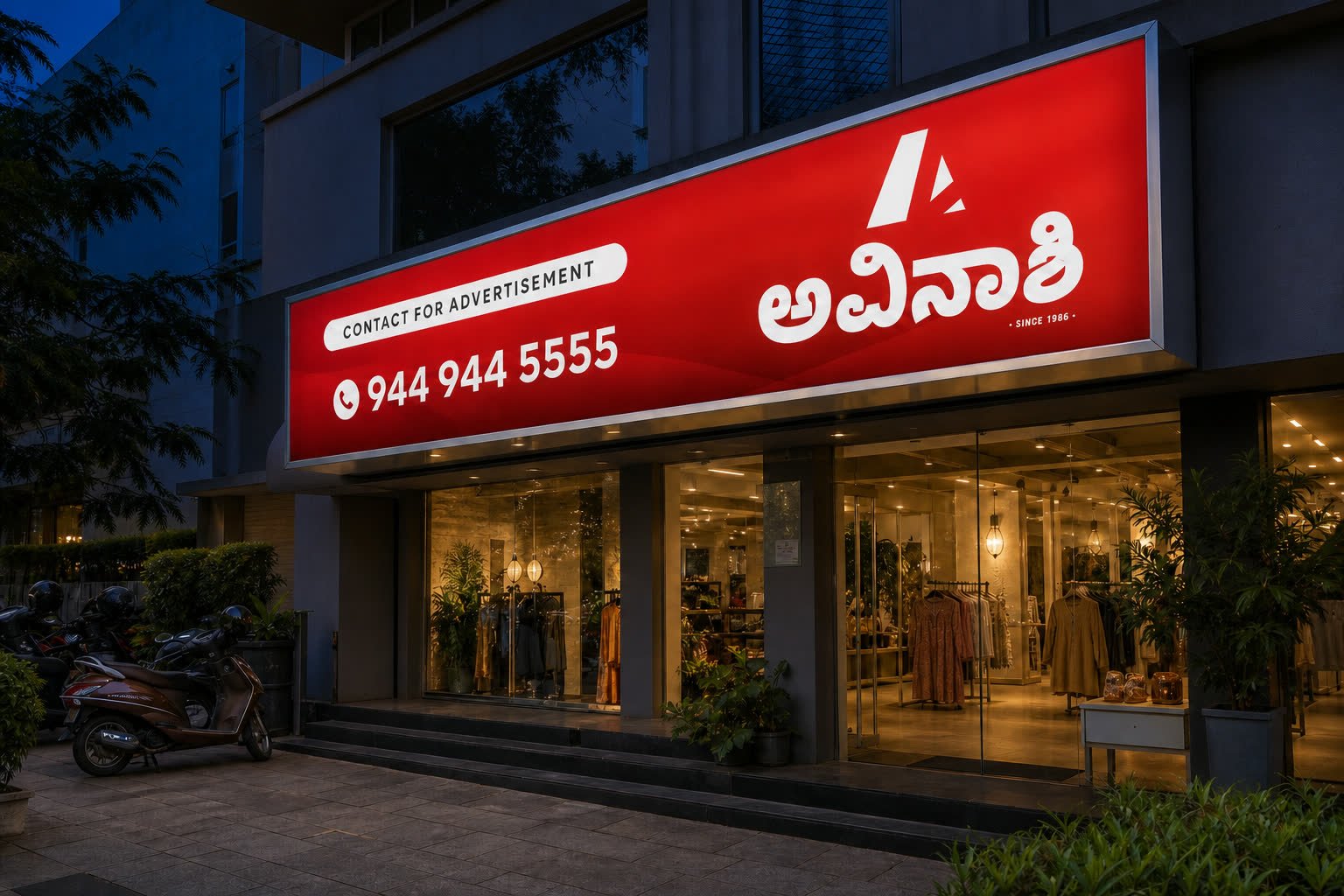
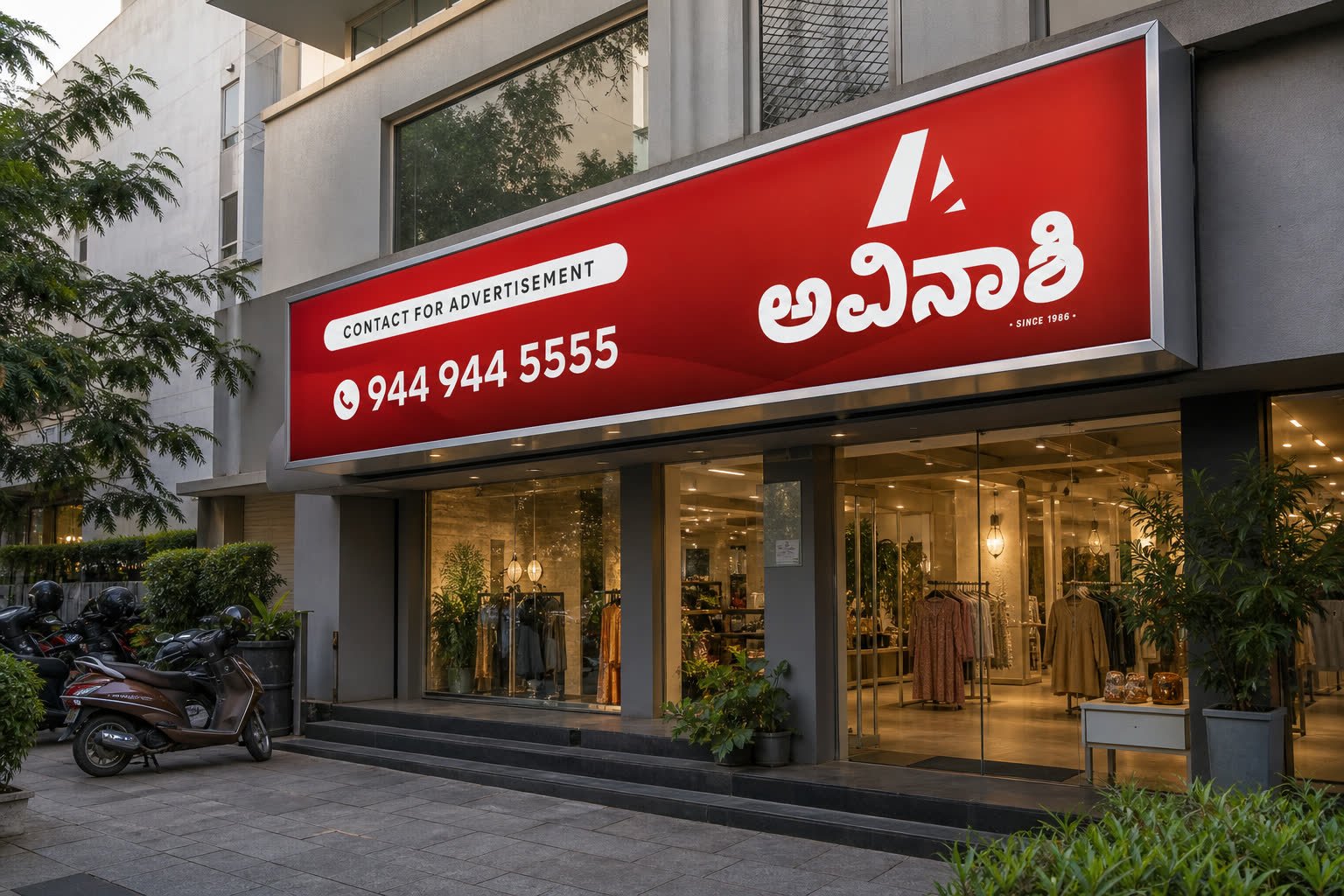
A glow sign board is a fabricated box: an aluminium or MS frame, an internal LED array, and a translucent acrylic face carrying the printed or vinyl-applied brand. Powered on, the whole face becomes an even sheet of light. That is what separates it from a printed board with a spotlight aimed at it: the sign is the light source, not a surface being lit.
The distinction matters most at the moment that decides whether a shop gets the customer. After sunset, a non-illuminated board is effectively invisible from across the road, while a glow sign is legible from the full length of the street. For any business trading into the evening (retail, pharmacy, clinic, restaurant, showroom, service centre), the sign is doing its hardest work in exactly the hours when an unlit board does none.
There are two broad constructions worth understanding before quoting. A backlit box has a continuous acrylic face over an internal LED array, giving an even glow across the whole panel, and is the standard, most cost-effective and most robust option. Lit-letter or channel-letter signage cuts each letter as an individual illuminated element mounted to the facade, which looks considerably more premium and costs proportionally more to fabricate and to service.
Because a glow sign is manufactured rather than rented, it is specified against the storefront it will sit on. Facade material determines the mounting hardware, available depth determines whether the box can be built to give even diffusion, and ambient light on the street determines the LED output needed for the sign to register rather than wash out. A sign built to a generic spec and fitted to a facade it was not measured for is the most common failure in the category.
Where glow signs work in Bengaluru
Brigade Road and MG Road
Central retail with heavy evening footfall and dense competing signage, the environment where illumination quality separates a sign from the clutter.
Commercial Street and Church Street
Dense shopping streets with narrow frontages, where facade depth and mounting design matter more than sign size.
Indiranagar 100 Feet Road
Retail, restaurant and showroom frontages with a strong evening and late-evening trade.
Koramangala and HSR Layout
High-street retail and food and beverage, with mixed facade types that need individual mounting assessment rather than a standard bracket.
Jayanagar and Malleswaram
Established neighbourhood shopping districts with long trading hours and a loyal, repeat local customer base.
Whitefield, Marathahalli and Sarjapur Road
Newer retail strips serving the eastern residential belt, where peak trade falls in the post-work evening window.
Glow Signs installations across Bengaluru
What determines the cost
- Size and area
- Priced largely on face area. Fabrication, framing and the internal LED array all scale with the size of the box.
- Construction type
- The biggest single variable. A backlit acrylic box and a lit-letter build are different products, and channel letters cost substantially more to fabricate and to service.
- Face treatment
- Flat printed acrylic, vinyl-applied graphics, or routed and pushed-through elements, with each step up adding fabrication cost.
- LED specification
- Module quality, density and driver grade decide brightness evenness and service life. This is where a cheap sign becomes visibly cheap within a year.
- Facade condition
- Mounting hardware is chosen for the specific facade. Difficult or load-limited facades need custom brackets and more installation time.
- Installation access
- Height, street access and permitted working hours affect crew and equipment cost, particularly on busy retail streets.
- Quantity
- Multi-outlet rollouts fabricated to one specification reduce the per-unit cost significantly compared with one-off builds.
We quote per site after survey, with media, production, statutory fees and taxes itemised separately rather than rolled into a single figure.
Approvals, compliance and structural requirements
- 01
Outdoor advertising in Bengaluru sits under the Karnataka Open Places (Prevention of Disfigurement) Act, 1981, together with the advertisement bye-laws of the civic body for the ward in question.
- 02
Storefront signage generally requires permission from the local civic body, with fees typically assessed against sign area. Requirements differ between commercial streets, mixed-use zones and residential areas, and are confirmed for the specific premises.
- 03
Bengaluru's outdoor regime has changed repeatedly since the 2018 advertisement bye-laws and the Karnataka High Court directions that followed, and the civic structure itself was reorganised under the Greater Bengaluru Governance Act. Permitted formats, permitted sites and the sanctioning authority are therefore confirmed per site at the time of quoting, never assumed from a previous campaign.
- 04
Signage must stay within the premises frontage and not project over public footpath or carriageway beyond what is permitted, which is one of the most frequently enforced conditions in the category.
- 05
Leased premises need landlord consent for facade mounting, and mall or complex units are additionally bound by the property's own signage guidelines, which are often stricter than the civic rules.
- 06
Electrical connection must be sanctioned, with outdoor-rated drivers and sealing appropriate to monsoon exposure.
- 07
GST applies on the media and production invoice. Statutory advertisement fees, where levied, are billed at actuals against the sanction receipt.
How a campaign runs, start to finish
- 01
Site measurement
Frontage measured on site, with facade material, available depth, power access and mounting condition recorded. Nothing is quoted from a photograph.
- 02
Design and specification
Brand artwork translated into a fabrication drawing, with construction type, LED specification and diffusion checked against ambient street light.
- 03
Permission check
Applicable civic signage requirements confirmed for the premises, along with landlord or property consent where relevant.
- 04
Approval
Fabrication drawing, materials and finish signed off before manufacture begins.
- 05
Fabrication
Frame built, face produced, LED array and drivers assembled and bench-tested in the workshop before the unit leaves it.
- 06
Installation
Mounted with hardware chosen for that facade and connected to a sanctioned supply.
- 07
Lighting walk-through
Evening inspection from across the street, checking diffusion evenness, hot spots, colour consistency and legibility at real viewing distance.
- 08
Handover
The unit is the client's asset. We hand over specification details for future servicing, and cover it for the agreed warranty period.
Best suited for
- Retail stores, showrooms and outlets trading into the evening
- Pharmacies, clinics and diagnostic centres that need to be findable after dark
- Restaurants, cafes and food and beverage outlets on high streets
- Banks, service centres and franchise networks needing consistent identity across outlets
- Multi-outlet chains rolling out one signage specification citywide
- Any business whose customers arrive by road and look for the shop from the street
What we have executed in this format
2024
High-street storefront rollout
A three-month programme covering 34 storefronts across Brigade Road, Indiranagar and Koramangala. Each unit was specified for the frontage it sits on, with mounting hardware chosen per facade condition and a post-install evening lighting walk-through at every site.
Ongoing
Multi-outlet signage programmes
Chain and franchise rollouts fabricated to a single specification for identity consistency, while mounting is adapted per facade, the combination that keeps a network looking uniform without forcing an unsuitable fixing onto a difficult frontage.
Glow sign boards in Bengaluru: frequently asked questions
What is a glow sign board?
A glow sign board is an illuminated signage unit: an aluminium or MS housing with an internal LED array behind a translucent acrylic face. When powered, the whole face becomes an even sheet of light, so the sign is the light source rather than a board being lit by an external lamp.
How much does a glow sign board cost in Bengaluru?
Cost is driven mainly by face area and construction type. A standard backlit acrylic box is the most cost-effective build; lit-letter or channel-letter signage costs substantially more to fabricate and to service. LED and driver quality, facade mounting complexity and installation access make up the rest, and multi-outlet rollouts to one specification reduce the per-unit cost significantly.
What is the difference between a backlit glow sign and lit letters?
A backlit box has a continuous acrylic face over an internal LED array, giving an even glow across the whole panel, and is standard, robust and cost-effective. Lit-letter or channel-letter signage cuts each letter as an individually illuminated element mounted to the facade, which reads as more premium and costs proportionally more.
Do I need permission for a shop sign in Bengaluru?
Generally yes. Storefront signage requires permission from the local civic body, with fees typically assessed against sign area, and requirements differ between commercial, mixed-use and residential zones. Leased premises also need landlord consent, and mall or complex units are bound by the property's own signage guidelines, which are often stricter than the civic rules.
How long does a glow sign board last?
The housing and acrylic face last for years with basic cleaning; service life is usually decided by the LED modules and drivers. Specification quality is what separates a sign that still lights evenly after several years from one that develops dark patches within a year.
How long does fabrication and installation take?
Typically a few weeks from approved drawing to installed sign: site measurement, design approval, workshop fabrication and bench testing, then mounting and an evening lighting walk-through. Multi-outlet rollouts are scheduled in batches.
Is a glow sign rented or owned?
Owned. Unlike hoardings or transit media, which are rented by the month, a glow sign is a manufactured asset that stays with the premises. You pay once for fabrication and installation rather than a recurring media rental.
Planning glow sign boards for your storefront?
Tell us the audience and the window. We will come back with sites, availability and an itemised quote.