Hoarding Advertising in Bengaluru
The large-format roadside board, still the highest-recall unit in outdoor.
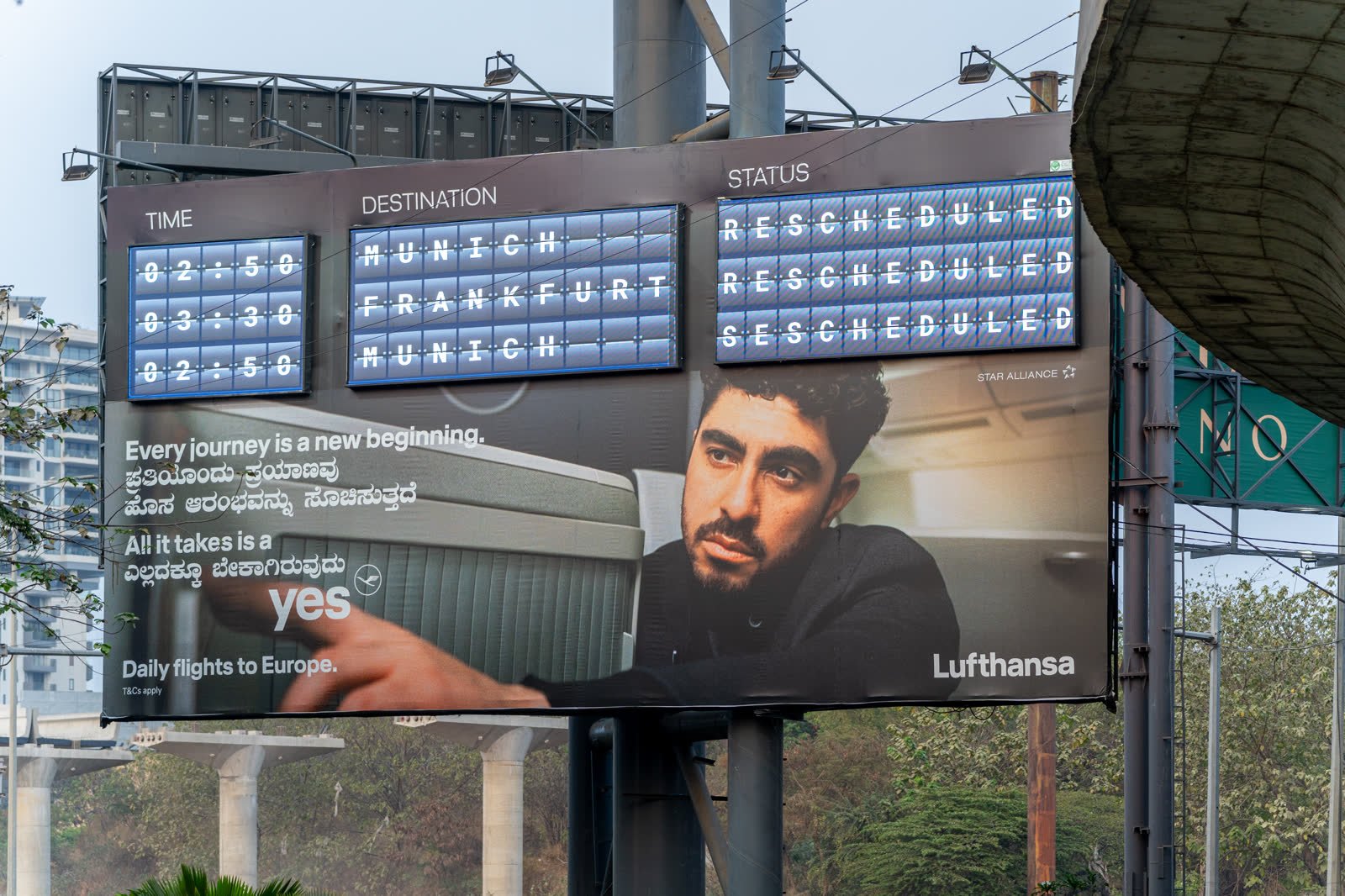
A hoarding is a large static roadside display, typically 40 ft × 20 ft, mounted on a fabricated steel structure and positioned for a long, unobstructed approach view. It remains the highest-recall format in Bengaluru outdoor advertising because it is read at speed, repeatedly, by the same commuter on the same route every day.
What hoarding advertising actually is
A hoarding, used interchangeably with billboard in India, is a large-format static display carrying a single printed message on a fabricated mild-steel structure. The defining characteristic is not the size but the approach: a hoarding is specified for the distance and angle over which an approaching driver can hold it in view. A board that is technically large but revealed only in the last forty metres of a curve will underperform a smaller board on a long straight run.
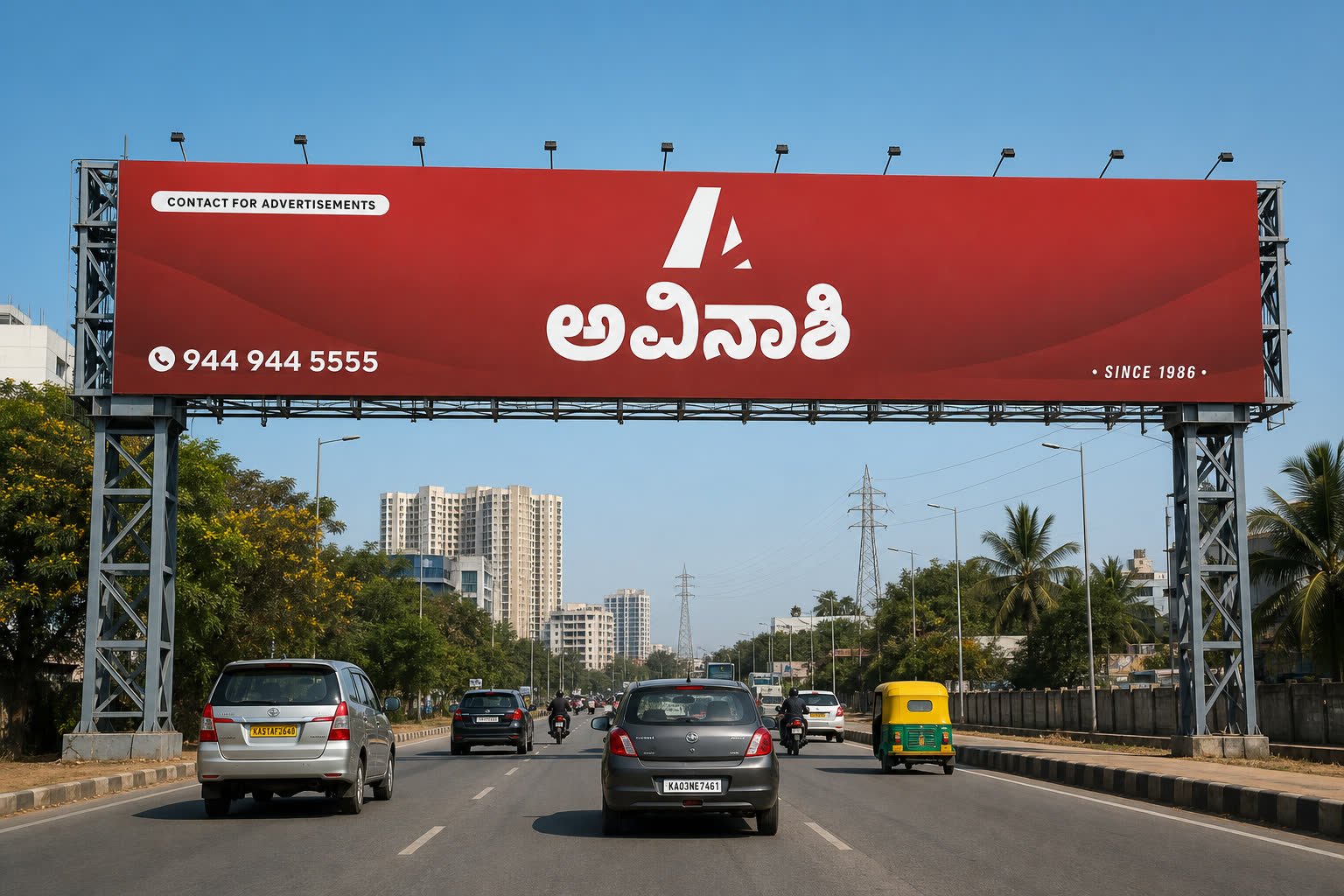
Hoardings differ from the adjacent formats in how they are mounted. A unipole rises from a single central column and is usually double-sided at a gateway; a gantry spans across the carriageway overhead; a hoarding is a face mounted on a ground- or terrace-based frame, read from an angle rather than head-on. That mounting difference is what makes hoardings the most site-flexible of the large formats and the most dependent on the specific plot they sit on.
The format earns its place through repetition rather than novelty. Bengaluru's commute is long and route-stable: the same person passes the same stretch of the Outer Ring Road twice a day, five days a week. A hoarding campaign is built to intercept that fixed pattern at three or four points, so the brand is not seen once at high cost but many times at declining marginal cost.
Where hoardings work in Bengaluru
Outer Ring Road, Marathahalli to Silk Board
The densest office commute in the city. Long signal cycles at Marathahalli, Bellandur and Iblur create genuine dwell time, so a board here is read rather than glimpsed.
Hebbal and Bellary Road
The airport corridor. Carries outbound business traffic, inbound visitors and the northern residential commute past a stretch with clean, foliage-free sightlines.
Whitefield and Old Madras Road
Tech-park catchment feeding ITPL and the eastern residential belt, with sustained peak-hour queueing on the approach.
Hosur Road and Electronic City
The southern IT corridor. The elevated expressway and its service roads split traffic into two readable layers at different speeds.
Tumakuru Road and Mysuru Road
The western and south-western highway approaches, carrying both intercity traffic and the industrial-belt commute.
Sarjapur Road and Bannerghatta Road
Fast-densifying residential corridors with a high concentration of new housing, schools and hospitals, the strongest fit for catchment-led rather than citywide campaigns.
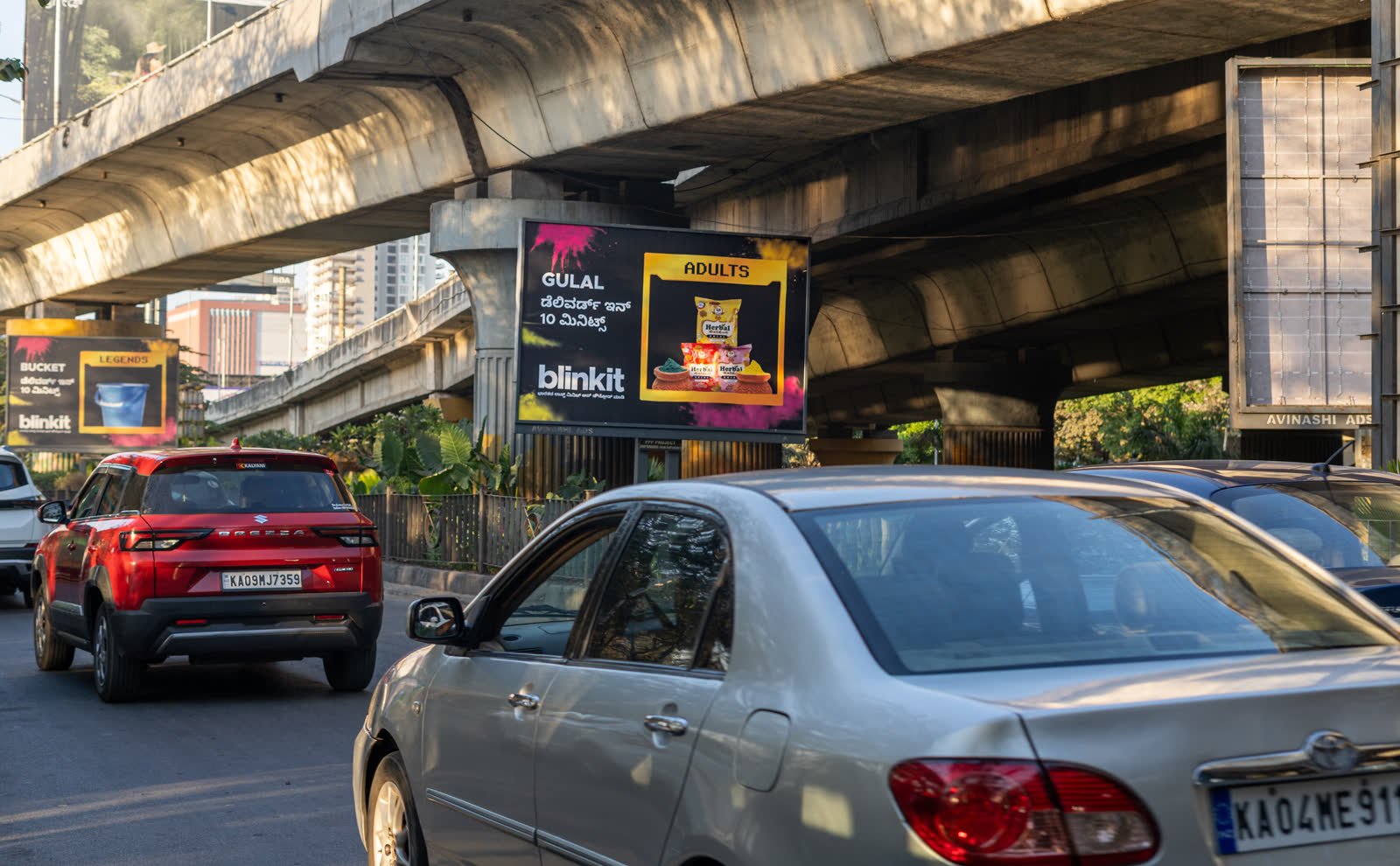
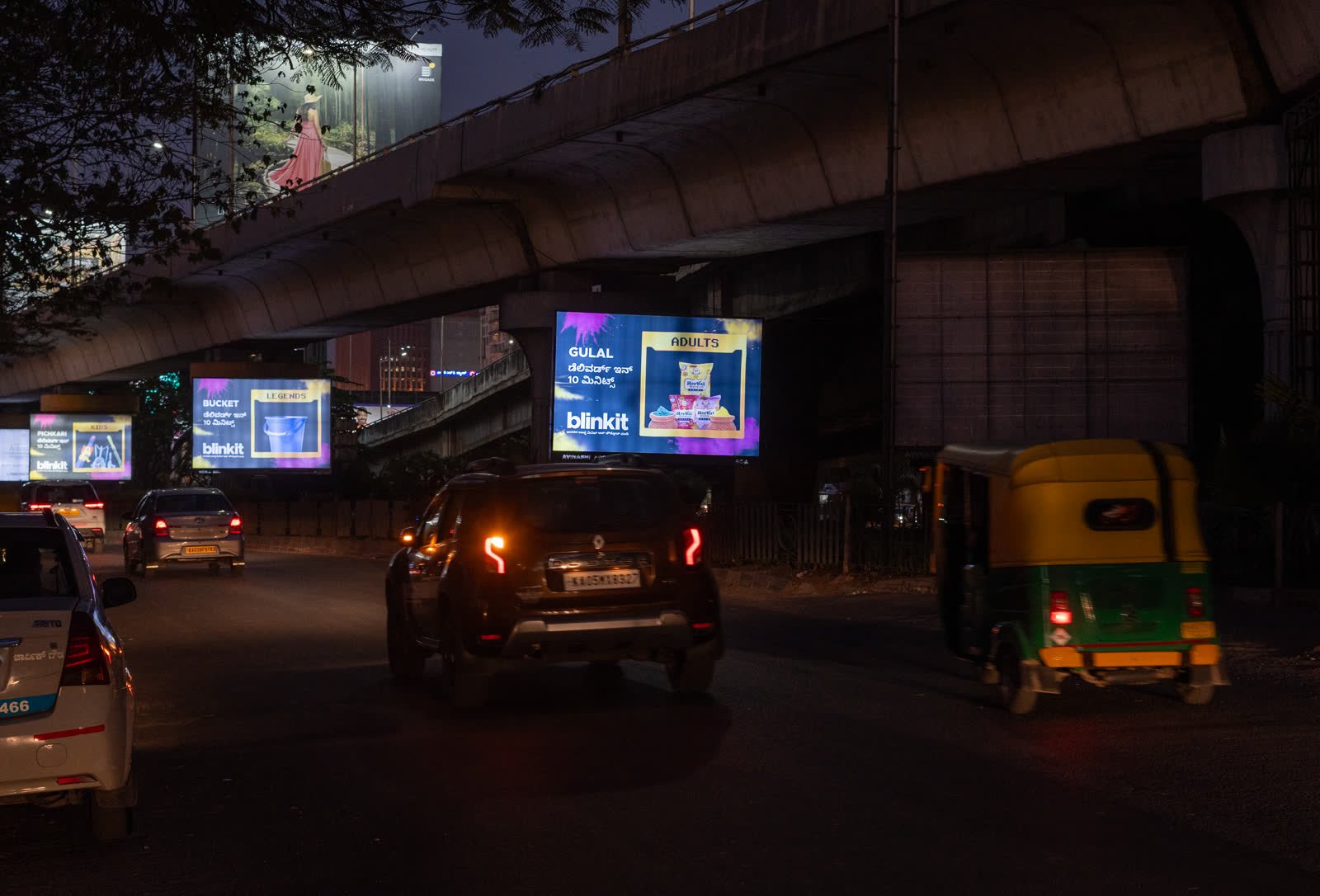
Hoardings installations across Bengaluru
.jpg)
.jpg)
.jpg)
.jpg)
.jpg)
.jpg)
.jpg)
.jpg)
.jpg)
.jpg)
.jpg)
What determines the cost
- Site tier
- The single largest variable. A prime arterial junction can cost several times an internal-road site of identical dimensions, because it is priced on traffic volume and dwell, not on square footage.
- Size and face count
- Priced per face. A double-sided structure is not double the price of a single face, but it is not the same price either.
- Illumination
- Front-lit sites carry the fixture and running cost, and are priced above non-lit equivalents. They also deliver a second daily viewing window after dark.
- Duration
- Rates step down with committed duration. Annual and multi-quarter bookings are materially cheaper per month than a one-month flight.
- Production and mounting
- Flex printing, transport and the mounting crew. A one-off cost per changeover, so campaigns with frequent creative rotation carry it more often.
- Statutory fees
- Advertisement fee or licence charges where levied by the civic body, billed at actuals against the sanction receipt.
- Season
- Festival quarters and major launch windows tighten inventory across the city and firm up rates. Booking ahead of the season is the reliable lever.
We quote per site after survey, with media, production, statutory fees and taxes itemised separately rather than rolled into a single figure.
Approvals, compliance and structural requirements
- 01
Outdoor advertising in Bengaluru sits under the Karnataka Open Places (Prevention of Disfigurement) Act, 1981, together with the advertisement bye-laws of the civic body for the ward in question.
- 02
Bengaluru's outdoor regime has changed repeatedly since the 2018 advertisement bye-laws and the Karnataka High Court directions that followed, and the civic structure itself was reorganised under the Greater Bengaluru Governance Act. Permitted formats, permitted sites and the sanctioning authority are therefore confirmed per site at the time of quoting, never assumed from a previous campaign.
- 03
Sites on private land require a registered lease or licence from the landowner along with proof of title, and terrace-mounted structures need the building owner's consent and confirmation that the roof can carry the load.
- 04
A structural stability certificate from a licensed structural engineer is required for the frame, and is re-verified periodically over long campaigns. This matters most through the monsoon and the pre-monsoon squall season, when wind loading is the real failure mode.
- 05
Illuminated sites need a sanctioned electrical connection and a metered supply. Drawing lighting load off an unrelated connection is a common shortcut and a common cause of a board being pulled down.
- 06
GST applies on the media and production invoice. Statutory advertisement fees, where levied, are billed at actuals against the sanction receipt.
How a campaign runs, start to finish
- 01
Brief and catchment definition
Who the campaign needs to reach and where they actually travel. This determines corridor selection before any site is discussed.
- 02
Site survey and shortlist
We photograph candidate sites from the approach lane at the speed traffic actually moves, and check for foliage, flyover shadow and competing clutter.
- 03
Eligibility and permission check
Current permissibility for that specific site, ownership documentation and the applicable sanction route are confirmed before anything is committed to the client.
- 04
Booking and confirmation
Site, duration, illumination and changeover schedule are locked in writing.
- 05
Artwork and print
We supply the exact print dimensions and safe area. Artwork is checked for legibility at approach distance, which is a different test from legibility on a screen.
- 06
Installation
Mounting is scheduled for low-traffic windows. Every install is photographed on completion from the approach angle, not just head-on.
- 07
Go-live audit
A day photograph and a night photograph within the first week, confirming tension, alignment and illumination.
- 08
Monitoring and changeover
Periodic condition checks through the run, with flex replacement on damage or on the agreed creative rotation.
- 09
Takedown and restoration
Media stripped and the site returned to its agreed condition at campaign end.
Best suited for
- Product and brand launches that need citywide awareness inside a short window
- Real estate projects advertising to a defined catchment along a specific corridor
- Retail and QSR chains driving footfall to nearby outlets
- Education and admissions campaigns keyed to the enrolment calendar
- Automotive, jewellery and consumer durables through festival quarters
- Hospital and diagnostic networks building neighbourhood recall
What we have executed in this format
2022 to present
Bangalore Development Authority public-private partnership
A PPP engagement covering structured outdoor media across BDA-managed corridors and civic locations. Civic work of this kind is delivered against published guidelines with the authority, structural review and on-ground execution teams coordinated in parallel; we continue to maintain the installed inventory.
2022 to present
Hubli-Dharwad Municipal Corporation tender
A municipal outdoor media tender extending our footprint beyond Bengaluru into the twin-city region, spanning long-format hoardings and civic-zone signage under the same compliance discipline.
Ongoing
Multi-site corridor campaigns
Rolling hoarding programmes across South and East Bengaluru built on route-repetition logic: the same commuter meeting the brand at several points on one journey rather than once at a single landmark.
Hoarding advertising in Bengaluru: frequently asked questions
What is the standard hoarding size in Bengaluru?
40 ft × 20 ft is the standard large-format roadside hoarding. 48 ft × 20 ft and larger are available on sites that can carry them, and civic and internal-road locations typically run smaller standardised panels between 20 ft × 10 ft and 30 ft × 15 ft.
How much does hoarding advertising cost in Bengaluru?
There is no single citywide rate. Cost is driven mainly by site tier, then by size, illumination and committed duration. A prime arterial junction can be several times an internal-road site of the same dimensions. We quote per site after survey, with production, statutory fees and GST itemised separately.
Do I need permission to put up a hoarding in Bengaluru?
Yes. Hoardings require sanction from the relevant civic body under the Karnataka Open Places (Prevention of Disfigurement) Act, 1981 and the applicable advertisement bye-laws, plus landowner consent and a structural stability certificate. Because Bengaluru's rules and civic structure have changed repeatedly since 2018, we verify current permissibility for each specific site before quoting rather than relying on precedent.
What is the minimum booking period?
One month is the usual minimum on most sites. Rates step down significantly for quarterly and annual commitments, so short single-month flights are the most expensive way to buy the format.
What is the difference between a hoarding and a unipole?
Mounting. A hoarding is a face on a ground- or terrace-based frame, read at an angle from the approach lane. A unipole rises on a single central column, stands higher, and is usually double-sided at a gateway or junction so it is read from both directions of travel.
How long does it take to go live?
On an available site with documentation in order, typically two to three weeks from confirmation. Survey and permission checks run first, then artwork and printing, then a mounting slot in a low-traffic window. Sites needing fresh sanction take longer, and we say so upfront rather than after booking.
What happens if the flex is damaged during the campaign?
Condition is checked periodically through the run and damaged media is replaced. Monsoon wind damage is the common cause in Bengaluru, which is why tension and fixing quality at install matter more than they appear to.
Planning a hoarding campaign in Bengaluru?
Tell us the audience and the window. We will come back with sites, availability and an itemised quote.