Bus Shelter Advertising in Bengaluru
The one outdoor format the audience reads standing still.
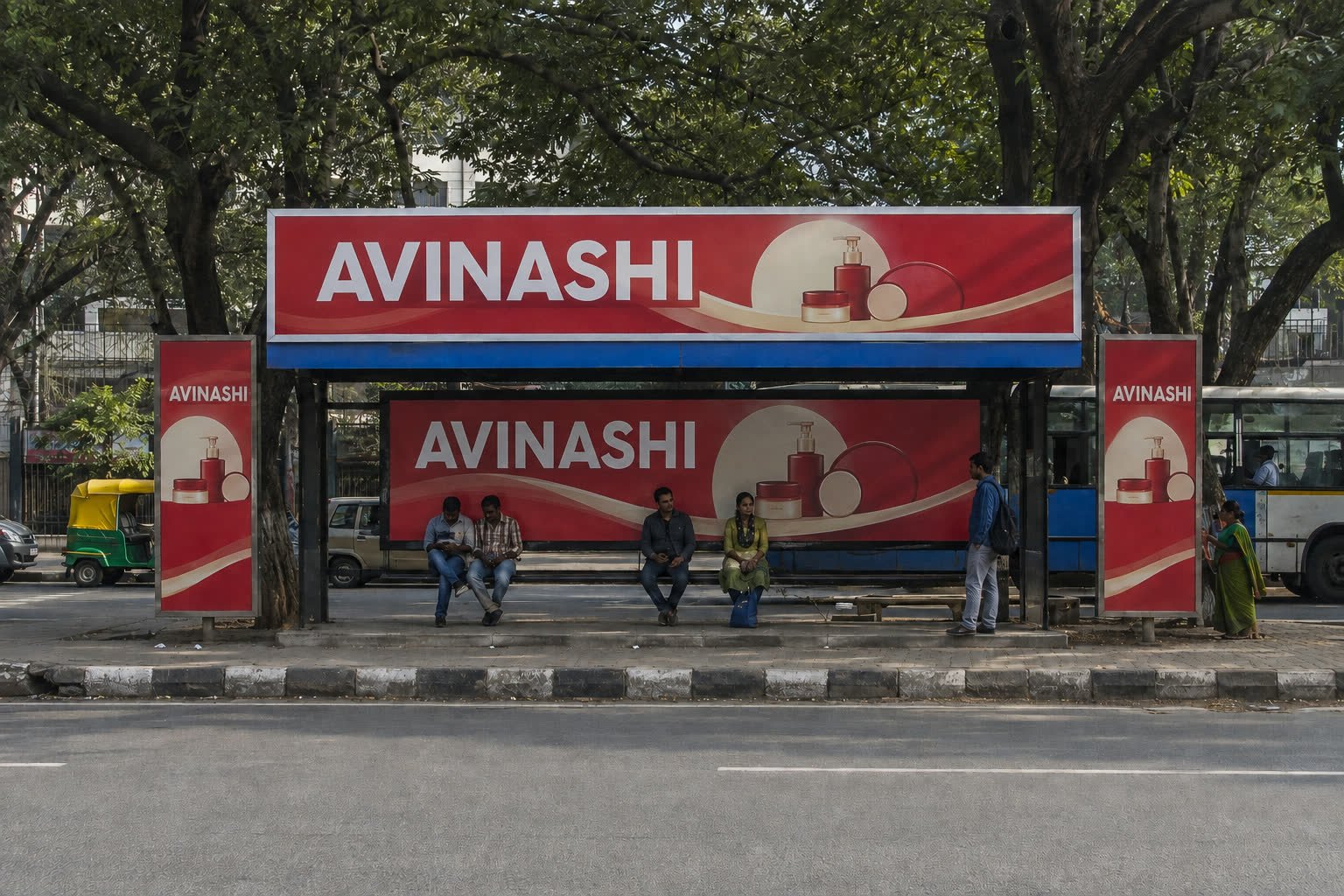
Bus shelter advertising places backlit panels, typically 6 ft × 4 ft per face, in the structures where commuters wait for a bus. It is the highest-dwell format in outdoor: a waiting commuter gives the panel minutes of unhurried attention at close range, which allows detail that no roadside format can carry.
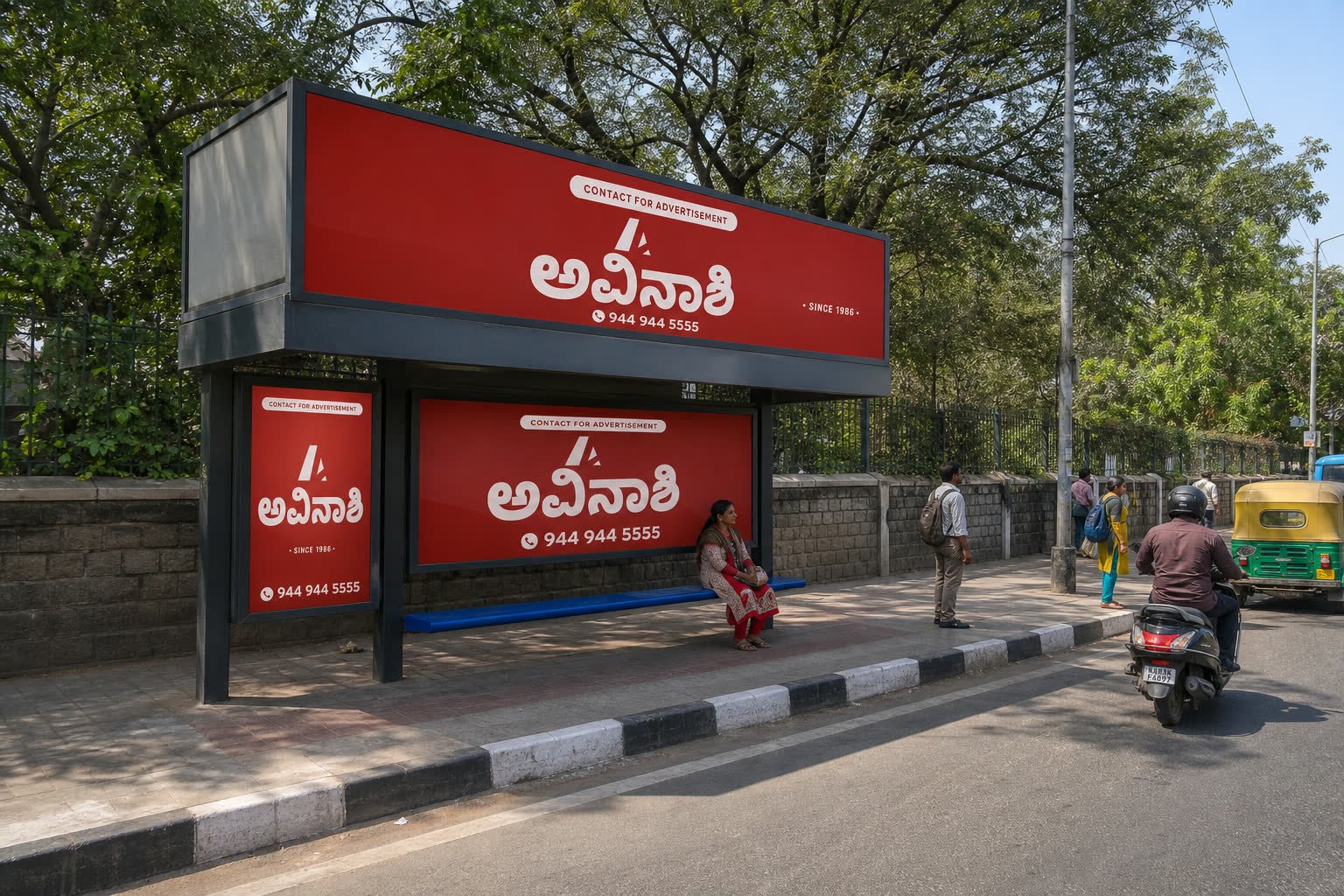
What bus shelter advertising actually is
Shelter media inverts the usual outdoor trade-off. Large-format roadside advertising buys enormous reach and accepts two seconds of attention per exposure; a bus shelter panel buys a much smaller audience and gets several minutes. That difference is not marginal: it changes what the creative can do.
Because the panel is read from two or three metres away by someone with time to spare, it can carry information a hoarding cannot: a proposition with more than five words, a price, a phone number, a QR code, a list of locations. Campaigns that need to explain something rather than simply assert it belong on shelter media, and putting explanatory copy on a hoarding instead is one of the most common and expensive mistakes in outdoor planning.
The format is also inherently local. A shelter reaches the people who live, work, study or shop within walking distance of that stop, day after day. That makes it the natural fit for anything with a catchment (a clinic, a showroom, a coaching centre, a new outlet) where citywide reach is largely wasted budget and neighbourhood saturation is the actual goal.
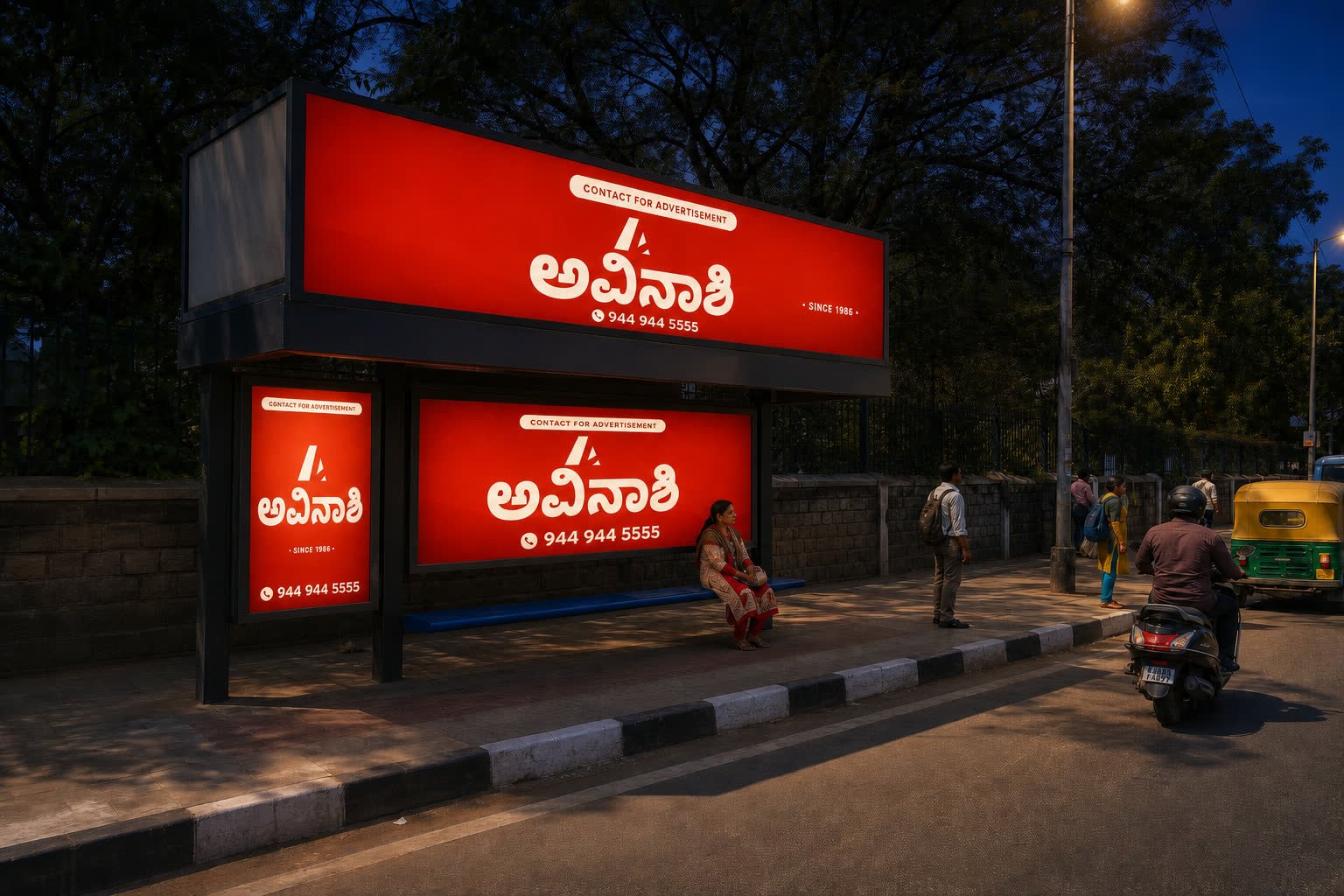
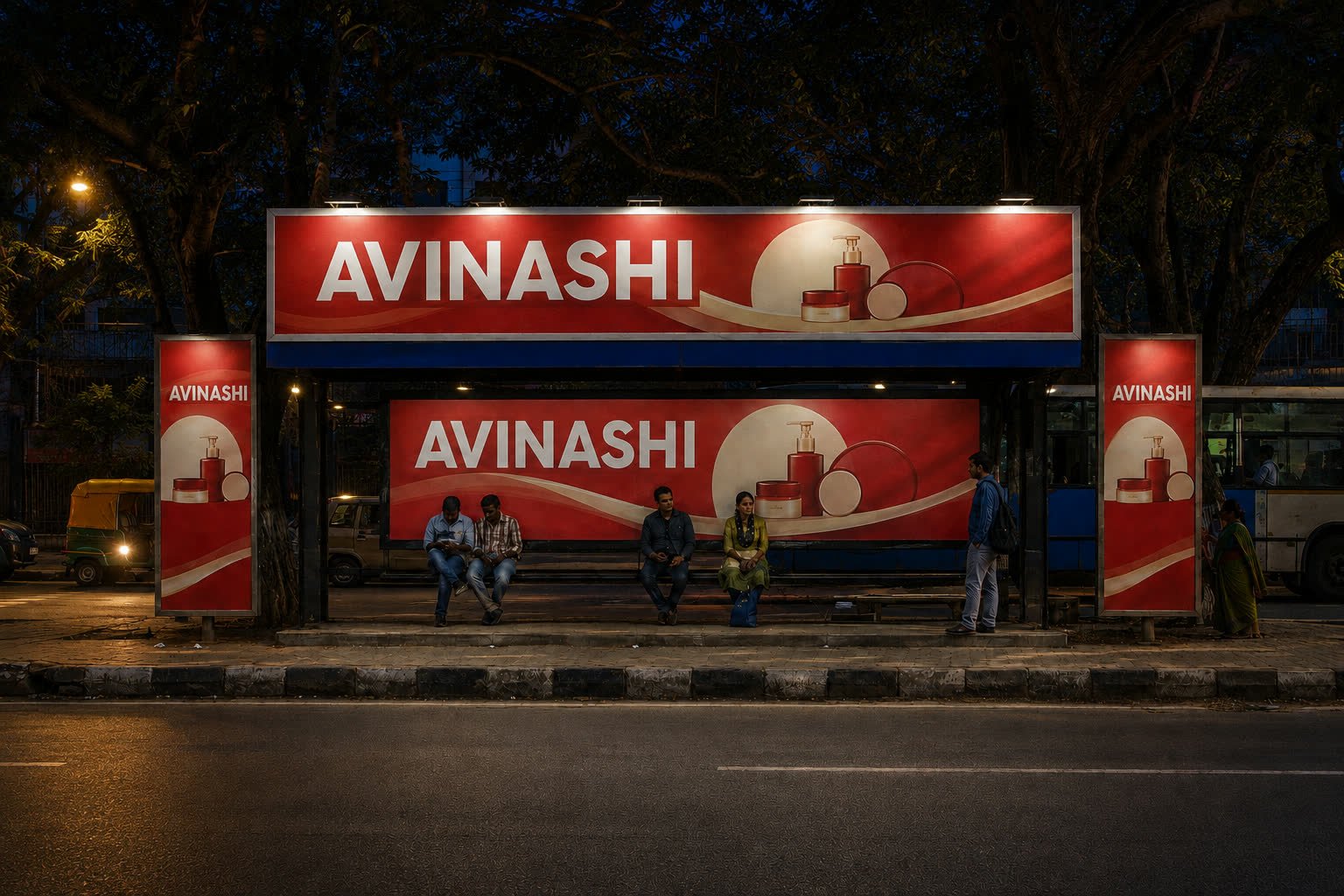
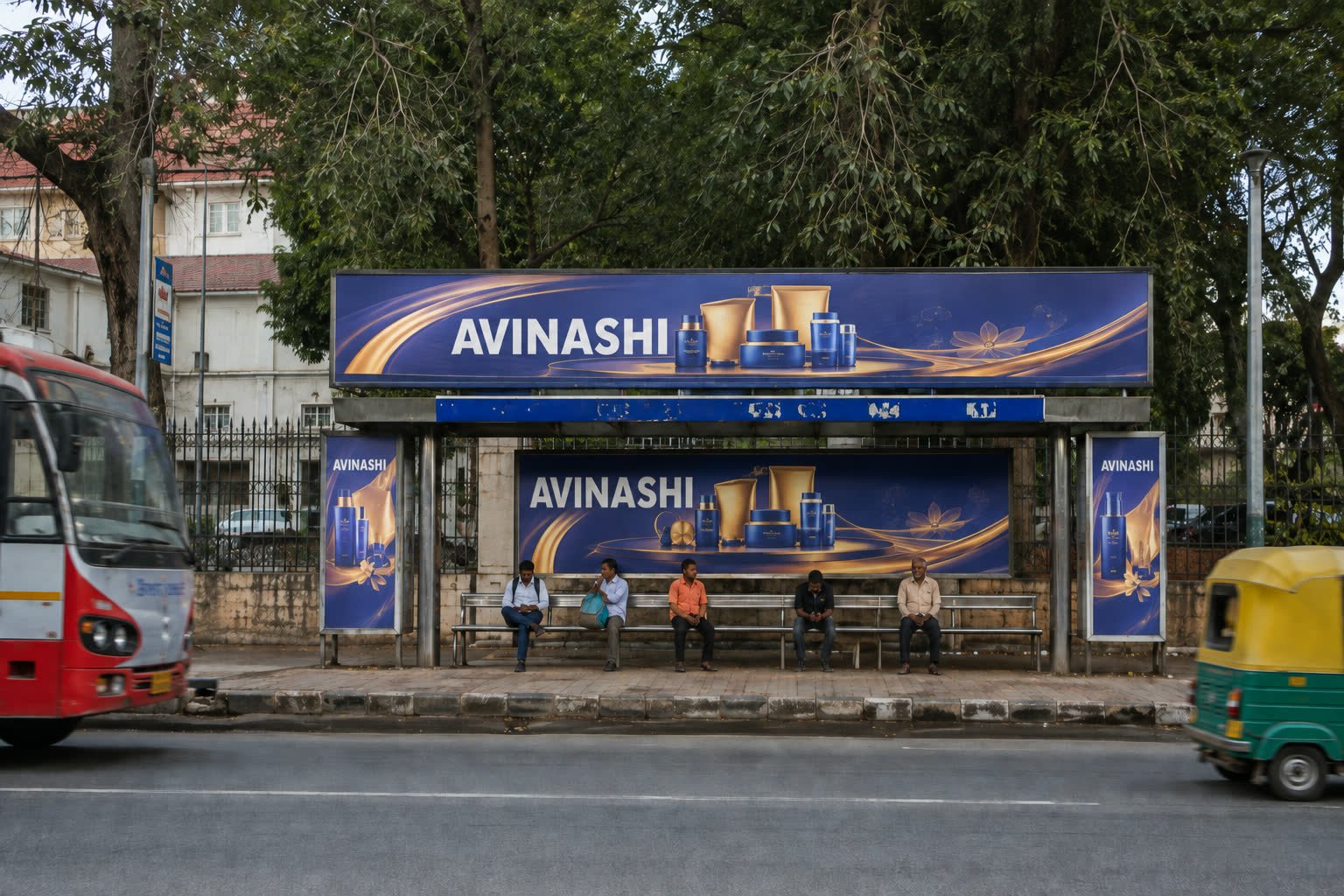
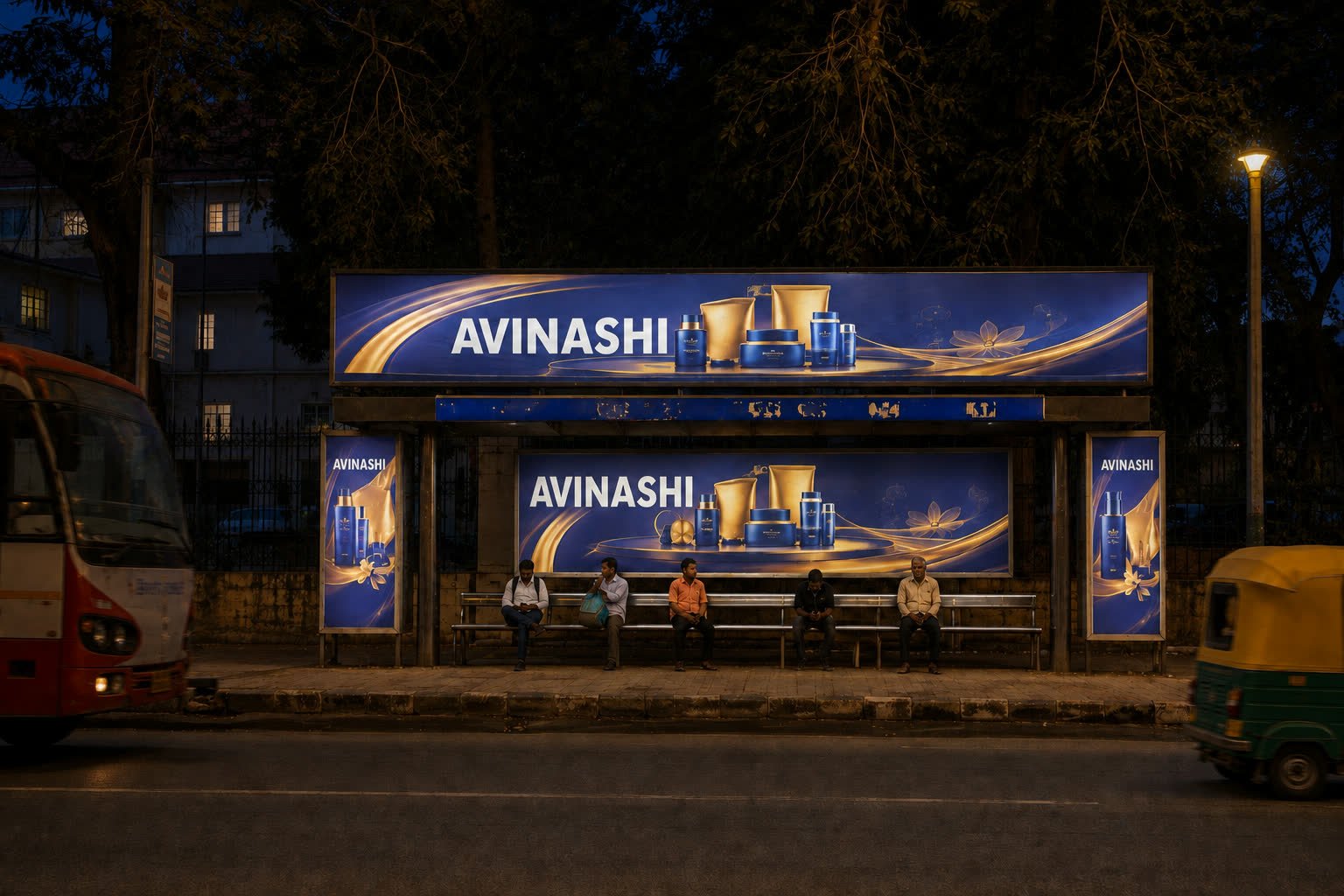
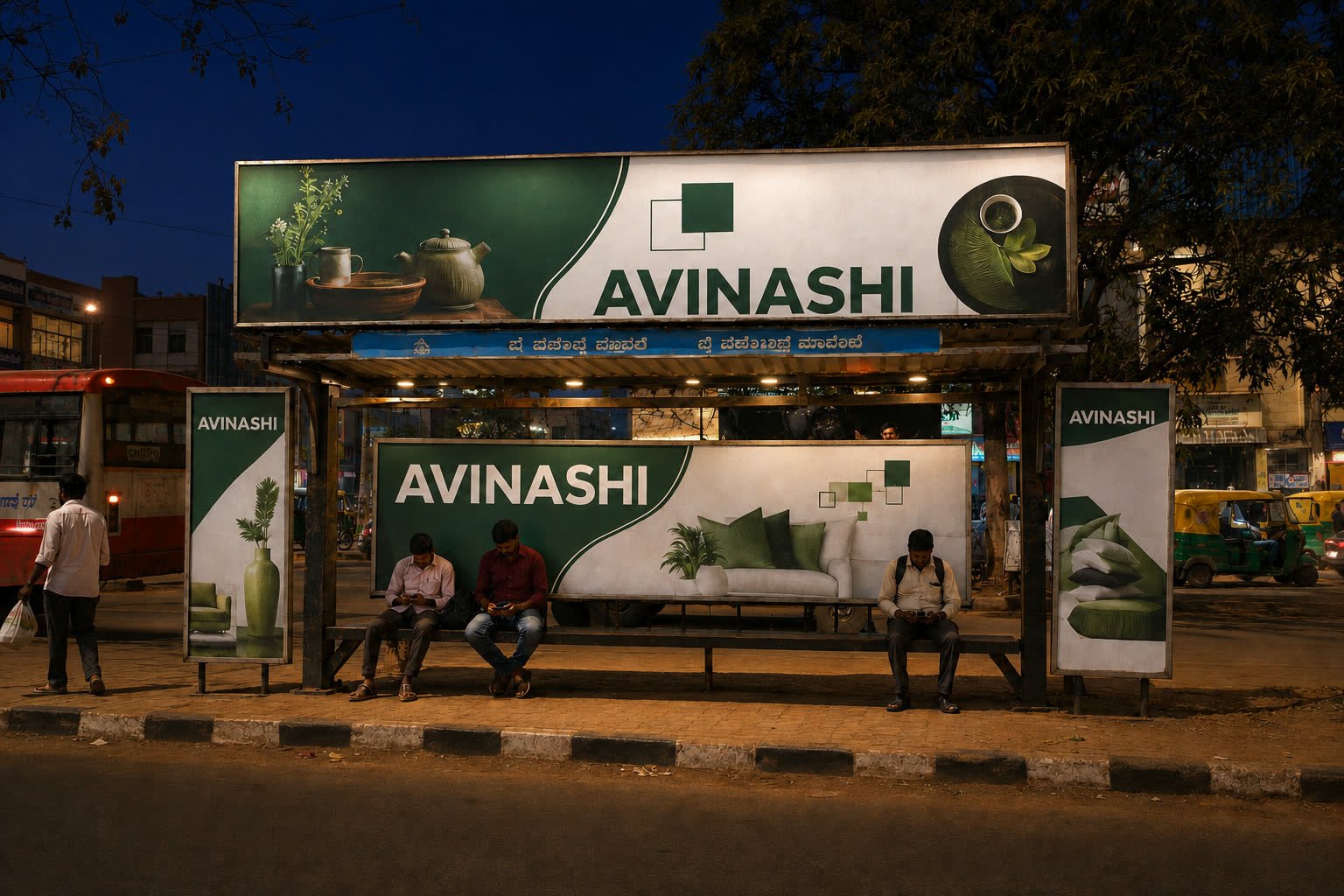
Panels are backlit and switch on automatically at dusk, so the evening commute is served as well as the morning one. Shelter lighting also does something the media plan does not capture: a lit, maintained shelter is a genuinely better place to stand at night, and the brand on it inherits some of that.
Where bus shelter media works in Bengaluru
Whitefield and the eastern tech belt
Dense last-mile bus usage around the tech parks, with heavy shelter occupancy at both the morning and evening peaks.
Outer Ring Road stops
High-frequency routes with sustained waiting numbers at the major stops along the office corridor.
Electronic City and Hosur Road
The southern IT commute, with concentrated waiting at shift-change times that are predictable enough to plan around.
Jayanagar, JP Nagar and Banashankari
Established southern residential neighbourhoods with strong local bus dependence and a genuinely resident audience rather than a passing one.
Malleswaram, Rajajinagar and the north-west
High-density residential catchments with dependable daily ridership and stable route patterns.
Koramangala, Indiranagar and HSR Layout
Mixed residential and retail high streets, where shelter panels reach a walking, shopping audience as well as a waiting one.
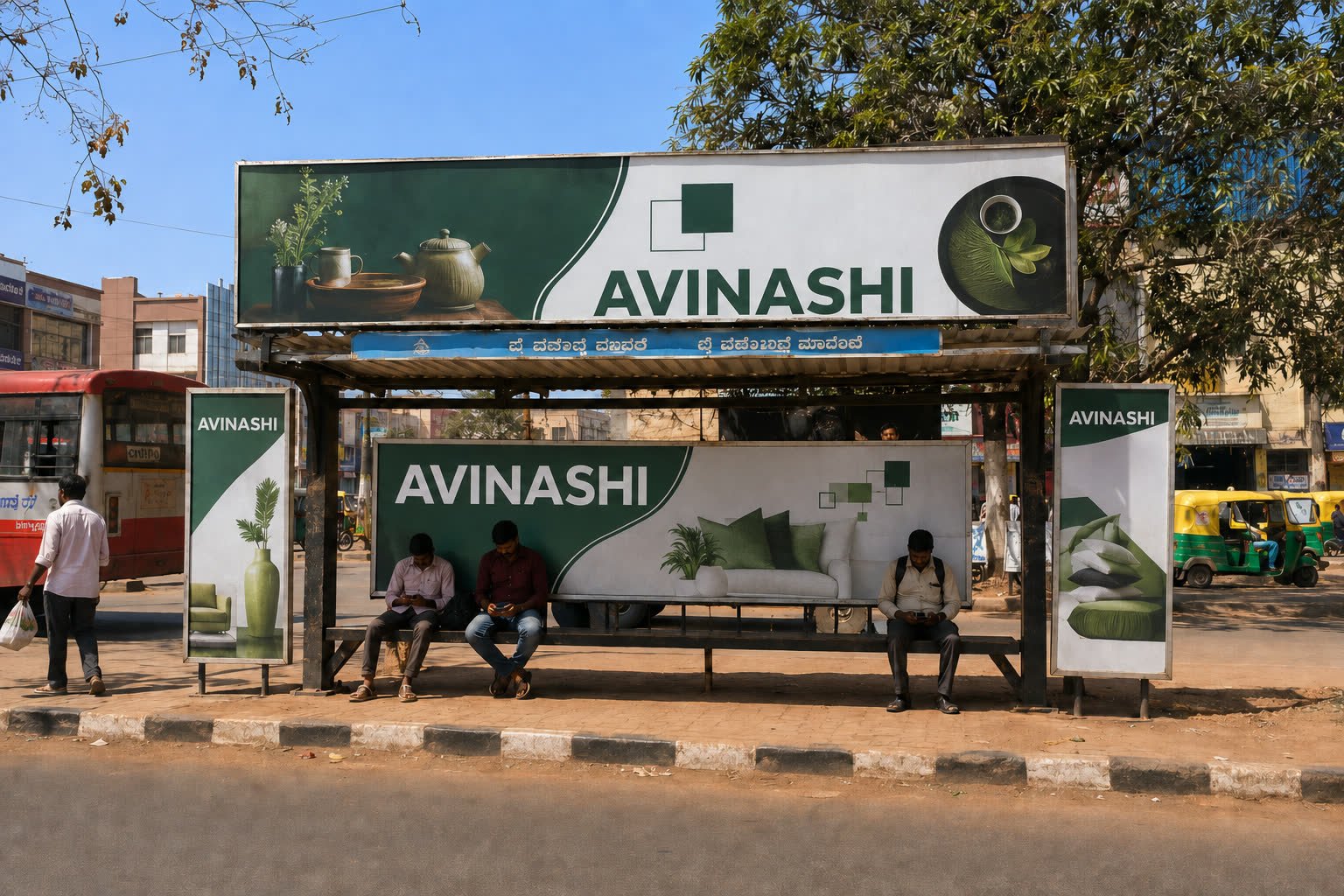
Bus Shelters installations across Bengaluru
What determines the cost
- Network size
- Shelter media is bought as a network. Rates are quoted per panel per month and improve materially with the number of panels taken.
- Stop footfall
- Priced on route frequency and waiting numbers at that stop. High-footfall interchange stops sit well above quiet residential ones.
- Catchment quality
- Stops in a specific commercial or residential catchment are priced above general network allocation, and are worth it for catchment-led campaigns.
- Face count per shelter
- Taking all faces at a shelter gives a dominant local presence at a better per-face rate than scattering single panels.
- Duration
- Longer commitments reduce the monthly rate and secure the better stops in the network.
- Production
- Backlit print per panel, incurred on each changeover. On large networks this is a meaningful share of the total.
- Maintenance standard
- Networks maintained to a higher cleaning and lamp-replacement standard cost more and are worth it, because an unlit panel is an unsold panel.
We quote per site after survey, with media, production, statutory fees and taxes itemised separately rather than rolled into a single figure.
Approvals, compliance and structural requirements
- 01
Outdoor advertising in Bengaluru sits under the Karnataka Open Places (Prevention of Disfigurement) Act, 1981, together with the advertisement bye-laws of the civic body for the ward in question.
- 02
Bengaluru's outdoor regime has changed repeatedly since the 2018 advertisement bye-laws and the Karnataka High Court directions that followed, and the civic structure itself was reorganised under the Greater Bengaluru Governance Act. Permitted formats, permitted sites and the sanctioning authority are therefore confirmed per site at the time of quoting, never assumed from a previous campaign.
- 03
Shelter advertising is executed under the terms applicable to the shelter: civic body arrangements, transport authority frameworks, or the concession under which the shelter was built and is maintained.
- 04
Panels must not obstruct the shelter's function: seating access, weather cover, route information displays and pedestrian movement around the structure all take precedence over the advertising face.
- 05
Electrical connections for backlit panels must be sanctioned and metered, with fittings specified for outdoor and monsoon exposure. Shelter lighting is public-facing infrastructure, and a dead panel is visible to everyone using the stop.
- 06
Where shelter upkeep forms part of the advertising arrangement, cleaning, lamp replacement and structural repair are contractual obligations rather than goodwill.
- 07
GST applies on the media and production invoice. Statutory advertisement fees, where levied, are billed at actuals against the sanction receipt.
How a campaign runs, start to finish
- 01
Catchment definition
Which neighbourhoods and routes matter. Shelter media rewards concentration in a catchment and punishes thin citywide scatter.
- 02
Network curation
Stops selected on route footfall, waiting numbers, lighting quality and how heavily the weather cover is actually used.
- 03
Availability and booking
Panel-level availability confirmed for the window, then network, face count and duration locked.
- 04
Artwork
Designed for close reading rather than glance. This is the format where a longer proposition, a price or a QR code genuinely works.
- 05
Backlit production
Print produced to panel specification for even light transmission across the face.
- 06
Installation
Panels fitted across the network with lamp and switching checks at each shelter.
- 07
Go-live audit
Day and night photographs per shelter, confirming panel fit, illumination and dusk-on switching.
- 08
Maintenance cycle
Cleaning, lamp replacement and panel condition checks through the run, the difference between a network that works and one that quietly degrades.
Best suited for
- Local businesses with a defined neighbourhood catchment
- Hospitals, clinics and diagnostic centres building area recall
- Coaching centres, schools and colleges through admission season
- New retail outlets and showrooms driving nearby footfall
- Any campaign whose message needs more than a few words to work
- Consumer brands wanting sustained neighbourhood presence at a lower entry cost than large format
What we have executed in this format
2024
BMTC route shelter network
A six-month, sixty-shelter programme across BMTC routes in Whitefield, the Outer Ring Road corridor and Electronic City, covering 120 panel faces. Stops were curated by route density, weather-cover usage and lighting quality, with artwork production and replacement cycles handled end to end.
2022 to present
Civic shelter inventory
Shelter and commuter-touchpoint media delivered under our BDA public-private partnership, maintained to civic specification as part of the ongoing engagement.
Bus shelter advertising in Bengaluru: frequently asked questions
What size are bus shelter advertising panels?
6 ft × 4 ft per face is the standard backlit panel, with most shelters carrying two or more faces. Panels are read from two to three metres by a waiting commuter, so they are specified for close reading rather than distance viewing.
How much does bus shelter advertising cost in Bengaluru?
It is quoted per panel per month and bought as a network rather than as single sites. The main variables are network size, footfall at the specific stops, and duration. Rates improve materially as panel count and commitment rise.
Why is bus shelter advertising better for detailed messages?
Dwell time. A waiting commuter gives the panel minutes of attention at close range, where a hoarding gets a couple of seconds at speed. That means a shelter panel can carry a fuller proposition, a price, a phone number or a QR code, all of which are wasted on large-format roadside media.
Can I choose specific bus stops?
Yes, and for catchment campaigns you should. Stops in a specific commercial or residential catchment are priced above general network allocation, and that premium is usually the difference between a campaign that reaches your customers and one that reaches the city.
Are bus shelter panels lit at night?
Yes. Panels are LED backlit with automatic dusk-on switching, so the evening commute is served as well as the morning one. Lamp replacement is part of the maintenance cycle, because an unlit panel is effectively an unsold one.
How many shelters should a campaign take?
Concentration beats spread. A campaign that takes most of the shelters across two or three neighbourhoods will outperform the same budget scattered thinly across the city, because shelter media works through repeated local exposure rather than reach.
Who maintains the shelters during a campaign?
Where upkeep forms part of the advertising arrangement, cleaning, lamp replacement and structural repair are contractual obligations. We run condition checks through the campaign rather than only at install.
Planning a bus shelter campaign in Bengaluru?
Tell us the audience and the window. We will come back with sites, availability and an itemised quote.